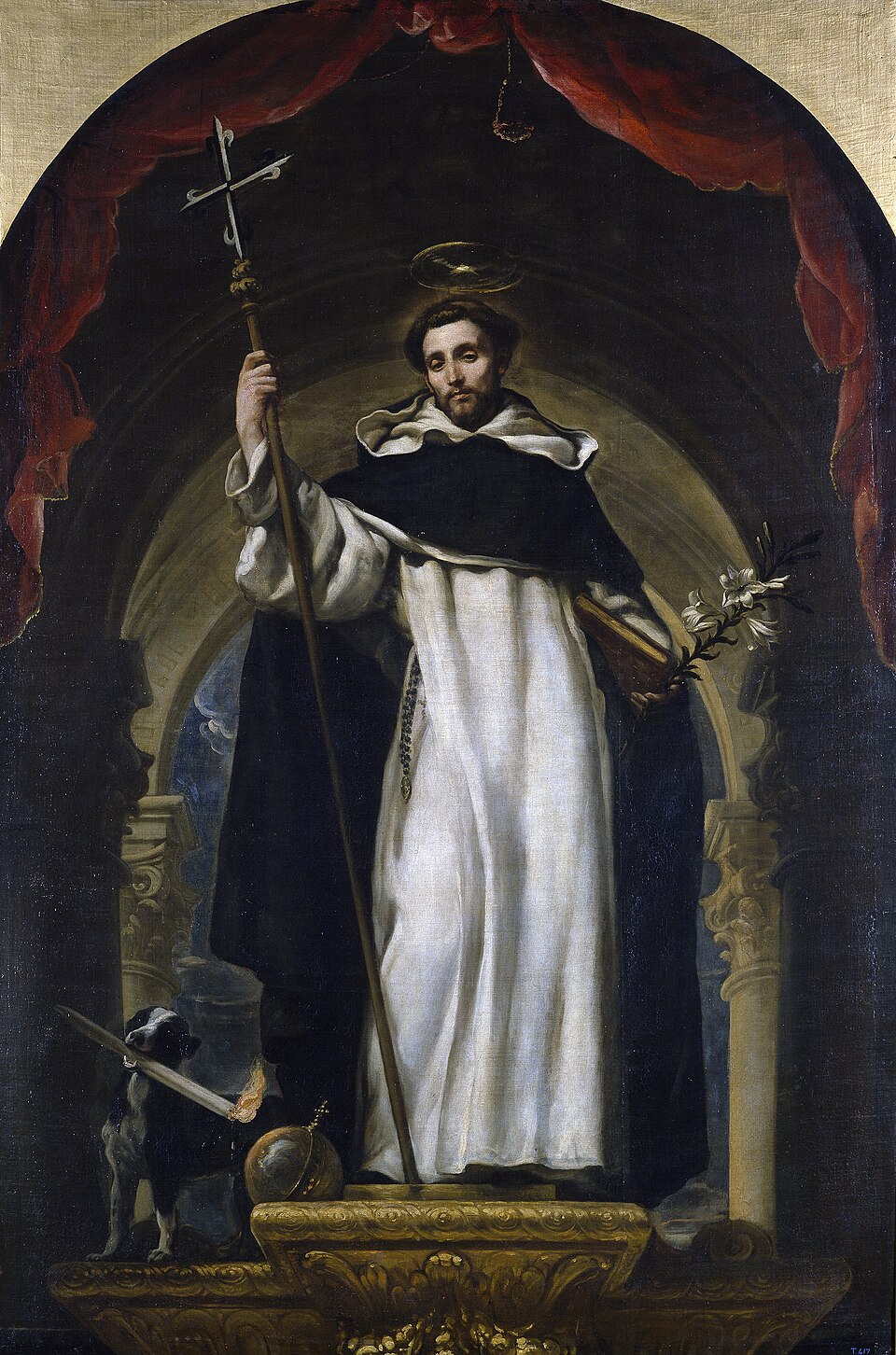
St. Dominic: Architect of the Dominican Order and a Lasting Legacy
In the annals of Christian history, few figures loom as large or cast as long a shadow as St. Dominic de Guzmán. Born in a turbulent era marked by social upheaval and religious fervor, Dominic emerged as a pivotal leader, whose spiritual vision gave birth to one of the most influential religious orders the world has ever known: the Order of Preachers, more commonly known as the Dominicans. His life was a testament to unwavering faith, intellectual rigor, and an ardent commitment to truth, fundamentally reshaping the landscape of medieval Christianity and leaving an indelible mark that resonates even today.
This article delves into the remarkable biography of St. Dominic, exploring his formative years, the challenges he faced, and the revolutionary spirit that defined his mission. We will uncover how a Spanish canon regular became a global saint, whose principles continue to inspire millions, and touch upon the broader reach of the name "Dominic" across history and modern contexts, including its independent usage in contemporary discussions.
The Formative Years and a Prophetic Calling
Dominic de Guzmán was born circa 1171 in Caleruega, Old Castile, Spain, into a noble family with deep roots in faith and service. His parents, Felix de Guzmán and Blessed Jane of Aza, were known for their piety and generosity, characteristics that profoundly influenced young Dominic. From an early age, Dominic displayed a remarkable intellect and a profound spiritual inclination. He received his education at the university of Palencia, where he studied liberal arts and theology for ten years, distinguishing himself not only for his academic brilliance but also for his profound compassion. A poignant anecdote from this period recounts how he sold his valuable books and sacred manuscripts during a famine to feed the poor, declaring, "I could not study upon dead skins, when men were dying of hunger." This act foreshadowed a life dedicated to selfless service and radical poverty.
After completing his studies, Dominic was ordained a priest and joined the canons regular of the Cathedral of Osma. Here, he embraced a life of rigorous prayer, communal living, and disciplined study. It was during a diplomatic mission to Denmark with Bishop Diego de Acebo in the late 12th century that Dominic encountered the burgeoning Albigensian heresy in Southern France. This dualistic movement, which denied the goodness of the material world and rejected many tenets of Catholic doctrine, was spreading rapidly, and the Church's efforts to counter it through lavish displays of power seemed ineffective. Dominic recognized the urgent need for a new approach – one based on intellectual persuasion, exemplary poverty, and authentic preaching.
Founding the Order of Preachers: A Revolutionary Vision
The encounter with the Albigensians in Languedoc was the crucible in which Dominic's revolutionary vision was forged. He saw that the heretics attracted followers through their ascetic lives and eloquent, albeit misguided, teachings. Dominic realized that to combat this, the Church needed preachers who were equally zealous, learned, and, crucially, lived lives of evangelical poverty, mirroring the apostles themselves. He began to preach extensively, engaging in debates with the heretics, always seeking to win them over through reasoned argument and personal example, rather than coercion.
In 1206, Dominic established a community of women in Prouille, France, converting nine Albigensian women and creating a safe haven and educational center for others. This was the first foundation of the Dominican nuns, an integral part of the order. Gradually, a group of like-minded men gathered around him, sharing his commitment to poverty, study, and preaching. In 1215, with the approval of Bishop Foulques of Toulouse, Dominic established a small community of preachers. Their rule of life was centered on common prayer, intense study, and itinerant preaching. Pope Honorius III formally approved the Order of Preachers in 1216 and 1217, instructing them to "preach the Gospel throughout the world."
Dominic’s genius lay in his organizational prowess and his foresight regarding the importance of education. He dispersed his nascent community of sixteen friars across Europe, sending them to major university cities like Paris, Bologna, and Salamanca, recognizing these centers of learning as crucial for evangelization. Within a decade, the order had expanded dramatically, establishing provinces from England to Poland. The Dominicans became known for their intellectual rigor, their mendicant lifestyle (relying on alms), and their eloquent preaching, earning them the moniker "Domini canes" – the "Hounds of the Lord" – tasked with guarding the flock against heresy and spreading the light of truth (Veritas, the Dominican motto).
Key Principles of the Dominican Order:
- Veritas (Truth): The pursuit and defense of truth through study and preaching.
- Contemplare et Contemplata Aliis Tradere (To contemplate and to hand on to others the fruits of contemplation): A balance between prayer, study, and active ministry.
- Poverty and Itinerancy: Living without possessions and traveling to preach the Gospel.
- Communal Life: Living in community, supporting one another in their mission.
- Study: Dedication to theological and philosophical learning as essential for effective preaching.
The Enduring Legacy of St. Dominic and the Dominican Order
St. Dominic died on August 6, 1221, in Bologna, Italy, exhausted by his relentless travels and preaching. He was canonized by Pope Gregory IX in 1234. His impact was immediate and long-lasting. The Dominican Order quickly rose to prominence, becoming a powerful intellectual force within the Church. They played a crucial role in the development of scholastic theology, producing giants like St. Thomas Aquinas and St. Albert the Great, whose philosophical and theological works continue to be studied globally.
Dominicans founded and taught at many of Europe's leading universities, contributing significantly to education and intellectual discourse. They served as inquisitors, missionaries, confessors to popes and kings, and established vibrant communities across the globe. From the Americas to Asia, Dominican friars and nuns have been at the forefront of evangelization, social justice, and scholarship for centuries.
Dominic's legacy extends beyond the institutional Church. His emphasis on rational argument, clear communication, and the pursuit of truth has resonated throughout history. He demonstrated that faith and intellect are not mutually exclusive but mutually enriching. His dedication to poverty and compassion for the poor remains a powerful challenge to materialism and indifference. The Dominican spirit continues to inspire new generations to seek truth, preach justice, and live lives of dedication and service.
The Enduring Name: From St. Dominic to Modern Personalities and Families
The name "Dominic" itself carries significant historical weight, deeply rooted in the Latin "Dominicus," meaning "of the Lord" or "belonging to God." This profound meaning, coupled with the immense influence of St. Dominic, ensured its widespread adoption across Europe and beyond. For centuries, it has been a popular choice for families wishing to honor the saint or simply choose a name with a strong spiritual resonance.
Interestingly, the popularity of the name "Dominic" transcends its religious origins, evolving to become a widely cherished personal identifier in countless cultures. While St. Dominic founded an order that has existed for over 800 years, the name "Dominic" itself has been independently chosen by countless families and individuals, creating a rich tapestry of namesakes throughout history and into the present day.
When we consider the widespread appeal of the name, it's natural for people to explore different individuals and their family connections. For instance, the name Dominic appears in contemporary culture, associated with figures like the musician Dominic Harrison, better known as Yungblud. Discussions around a 'dominic harrison familie' often arise in fan communities and biographical explorations, reflecting public interest in the personal lives and lineage of modern personalities. This highlights how a name like Dominic, while historically significant due to figures like the great saint, also flourishes independently in modern contexts, adopted by new families and celebrated by new generations.
For a deeper dive into the etymology, popularity, and cultural impact of this powerful name, explore Dominic Name Meaning: Origins, Popularity & Facts. Additionally, to understand how names persist and adapt across various social and historical landscapes, consider reading Understanding the Name Dominic: Beyond Specific Families. These resources offer valuable insights into the broader context of names and their evolution.
Practical Tip for Understanding Historical Figures vs. Modern Namesakes:
When researching individuals with the same first name, always cross-reference their full names, birth dates, and geographical locations to distinguish between historical figures, modern celebrities, and other public figures. The meaning and origin of a name often connect them, but their biographies and family histories are distinct and unique.
Conclusion
St. Dominic de Guzmán stands as an enduring beacon of faith, intellect, and evangelical zeal. His biography is a compelling narrative of a man who, armed with compassion, profound learning, and an unwavering commitment to truth, ignited a spiritual revolution that continues to shape the world. The Order of Preachers, his greatest legacy, remains a vibrant force for good, committed to contemplation, study, and preaching the Gospel in every age. While the name "Dominic" has taken on a life of its own, gracing countless individuals and families across the globe and through history, including contemporary figures like Dominic Harrison, it is the extraordinary life and timeless principles of the founder of the Dominicans that first imbued it with such profound and lasting significance.